
Smokers and Grills
Any barbecue contest is the back bone of a smoker. At times competitors will carry special-purpose equipment, such as offset smokers, ceramic cookers or pellet grills to provide constant temperatures over hours. There are advantages and disadvantages of each kind of smoker. Pellet smokers offer higher accuracy and consistency with less effort compared to an offset smoker, which needs attention and will always have the correct amount of smoke. The proper one depends on the cooking strategy and style of the pitmaster.
Critical Tools and Supplies.
Competitors, in addition to smokers, also make use of digitally controlled thermometers, digital probes, heat-resistant gloves, butcher paper, aluminum foil, and insulated coolers to keep the meat at the appropriate temperature. Others carry spares just in case of a failure, because failure during the contest may destroy weeks of training. Most teams carry their equipment in trailers stocked with complete kitchens, so that they can simulate the practice setting regardless of the location of the contest.
Mastering Time Management
Barbecue contest cooking involves timing as much as it involves taste. There is a fixed turn-in time associated with each category: brisket, ribs, chicken, and pork shoulder, and submission after the turn-in time may result in a disqualification. The pitmaster usually creates a detailed schedule that will start the night before the event, where each step (cleaning meat, rubbing it, getting the smoker ready, wrapping meats as the meat gets cooked, letting it rest before cutting) will start.
Roles Within Teams.
When playing in teams, there is a sharing of responsibilities. The temperature of the smoker can be tracked by one individual, garnishes can be made by another, timing and presentation can be handled by a third. The division of roles among teams helps to avoid errors and make sure that nothing is missed. Timing also applies to plating, as meat has to be cut, prepared and garnished correctly in order to impress judges.
Physical and Mental Training.
Staying Awake and Alert
As a result, barbecue competitions are sometimes 24-hour events where participants tend to the smoker overnight. Lack of sleep is a significant problem and pitmasters have to figure out how to remain awake without losing concentration on the task at hand. A great number of them turn to cooperation to shift, and the individual competitors use endurance by planning and pacing.
Mental Strength when Under Pressure.
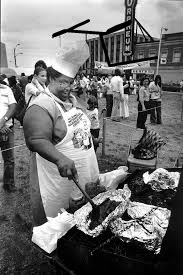
Competition can be very stressful–particularly when equipment malfunctions, weather changes unexpectedly, or the meat does not cook as it should. Pitmasters should be able to face pressure without panicking and it is essential that a pitmaster adapts within a short time without losing track. Culinary skill is as much as a strong mindset. Competitors with some experience tend to equate contests with marathons: it is a long and challenging road that needs perseverance as much as skills.
