

Getting ready to compete in a Barbecue Competition.
A barbecue contest is no hobby–it is a form of art that involves cooking, technical expertise, and strategizing.
To serious competitors the path to a successful contest was set many months ago, before the first cut of meat is ever smoked.
Each choice counts, the kind of protein you choose, the kind of wood you use to smoke, the time you smoke the food,
and how you serve the meal on the table. Competitors tend to treat the preparation process like a professional athlete
training to compete, developing highly organized timetables with practice runs, recipe experiments and equipment maintenance.
Every component of the preparation serves a singular objective: to ensure as much uniformity as possible since, at this stage of competition, a single slip can cost the title.
Selecting the Right Meat
Choosing the correct meat is the first and probably the most crucial step in contest preparation. Judges anticipate that
contestants will demonstrate the best flavors and textures of brisket, ribs, pork shoulder, or chicken, and that fact
leaves competitors with no option but to begin with mediocre ingredients. A lot of pitmasters go to specialty
butchers or visit preferred farms to get cuts with the appropriate marbling, fat levels and freshness.
Even the process of finding the ideal brisket can be tiring on its own, with rival companies seeking a trade-off between
lean and fatty sides that will yield down to juicy tender pieces. Others go as far as to buy two or more portions of the
same meat to practice a few weeks before the occasion so that they know how that portion reacts to their cooking techniques.
Understanding Meat Quality
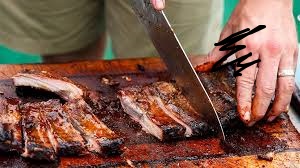
To purchase good piece of meat is not enough, competitors need to know how quality affects cooking. An example of this is a brisket that is more marbled and can be cooked longer without drying, whereas the less marbled ones require a stricter watch to ensure they do not turn tough. Just like the ribs, evenly-sized and uniformly-thick ribs facilitate even cooking thus eliminating chances of certain portions being overcooked and others undercooked. Pitmasters also improve their chances of achieving consistent results in a contest environment by learning the relationship between grades and different cuts.
Mastering Rubs, Marinades and Sauces.
No barbecue is complete without seasoning and in competitions rubs, marinades and sauces are as essential as the meat itself. Months before the event, participants are testing as many as dozens of variations of flavor, and how spices react to smoke and how sweetness or heat will linger on the palate. One needs to find a golden mean, if there is excessive spice the judges will be overwhelmed and insufficient spice will leave the dish boring. Other pitmasters guard their recipes like family secrets, and change them over the years, slightly, to remain competitive.
Practice Makes Perfect
These flavor profiles can be improved with each test run. Pitmasters smoke small batches of samples, documenting the characteristics of various flavors and adjusting the ratio of salt, sugar, chili powder, garlic or paprika. The consistency of the sauces is tested so that they do not end up suffocating the meat. They seek nuance and balance and not sheer audacity and this is why the aim is to come up with a flavor that is memorable, balanced, smoky and yet clean. This is a period of trial and error that allows the contestants to be confident that their flavor combination will shine through, without dividing the panel.
