
Getting ready to compete in a Barbecue Competition.

A barbecue contest is no hobby–it is a form of art that involves cooking, technical expertise, and strategizing.
To serious competitors the path to a successful contest was set many months ago, before the first cut of meat is ever smoked.
Each choice counts, the kind of protein you choose, the kind of wood you use to smoke, the time you smoke the food,
and how you serve the meal on the table. Competitors tend to treat the preparation process like a professional athlete
training to compete, developing highly organized timetables with practice runs, recipe experiments and equipment maintenance.
Every component of the preparation serves a singular objective: to ensure as much uniformity as possible since, at this stage of competition, a single slip can cost the title.

Selecting the Right Meat

Choosing the correct meat is the first and probably the most crucial step in contest preparation. Judges anticipate that
contestants will demonstrate the best flavors and textures of brisket, ribs, pork shoulder, or chicken, and that fact
leaves competitors with no option but to begin with mediocre ingredients. A lot of pitmasters go to specialty
butchers or visit preferred farms to get cuts with the appropriate marbling, fat levels and freshness.
Even the process of finding the ideal brisket can be tiring on its own, with rival companies seeking a trade-off between
lean and fatty sides that will yield down to juicy tender pieces. Others go as far as to buy two or more portions of the
same meat to practice a few weeks before the occasion so that they know how that portion reacts to their cooking techniques.

Understanding Meat Quality
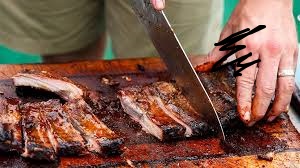
ribs

To purchase good piece of meat is not enough, competitors need to know how quality affects cooking. An example of this is a brisket that is more marbled and can be cooked longer without drying, whereas the less marbled ones require a stricter watch to ensure they do not turn tough. Just like the ribs, evenly-sized and uniformly-thick ribs facilitate even cooking thus eliminating chances of certain portions being overcooked and others undercooked. Pitmasters also improve their chances of achieving consistent results in a contest environment by learning the relationship between grades and different cuts.

Mastering Rubs, Marinades and Sauces.

No barbecue is complete without seasoning and in competitions rubs, marinades and sauces are as essential as the meat itself. Months before the event, participants are testing as many as dozens of variations of flavor, and how spices react to smoke and how sweetness or heat will linger on the palate. One needs to find a golden mean, if there is excessive spice the judges will be overwhelmed and insufficient spice will leave the dish boring. Other pitmasters guard their recipes like family secrets, and change them over the years, slightly, to remain competitive.

Practice Makes Perfect

These flavor profiles can be improved with each test run. Pitmasters smoke small batches of samples, documenting the characteristics of various flavors and adjusting the ratio of salt, sugar, chili powder, garlic or paprika. The consistency of the sauces is tested so that they do not end up suffocating the meat. They seek nuance and balance and not sheer audacity and this is why the aim is to come up with a flavor that is memorable, balanced, smoky and yet clean. This is a period of trial and error that allows the contestants to be confident that their flavor combination will shine through, without dividing the panel.
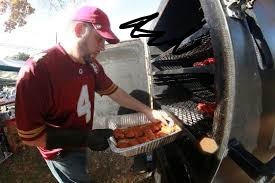
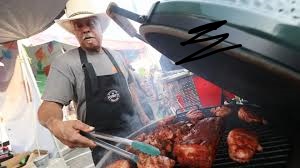
Building Social Capital.

The barbecue competitions are also powerful because they unite communities through one common interest: food. Local suppliers
also establish stalls of hand-made goods, drinks and local delicacies and provide a bustling marketplace that encourages
small enterprises. Families and groups of friends sit under tents and picnic areas and as they consume the food, they
get attached with other people. These contests are usually followed by live music, games, and activities that
are child-friendly and thus are more of a festival than a competition. There is a particularly strong sense of unity
when the proceeds are given to community projects or charities. The attendants sense that regardless of whether
the money is used to finance the local schools, sports team, or healthcare projects, they are helping their community
directly by engaging in the process. This fun and social responsibility combine to make sure that even after the smoke of the grills has dissipated the event is still remembered.

Giving back to the Community and Charities.

Barbecue competitions offer not only local companies and charity organizations the opportunity to flourish but also to co-exist.
By presenting their specialties, restaurants get more visibility, food trucks experiment with new foods, and local farms
can provide fresh food products that would reflect the agricultural advantage of the area. In the case of charities,
such competitions tend to be amongst the most successful fundraising activities of the year. A part of the ticket purchase,
vendor charges or entry fees are often donated to a cause such as the education of children or disaster relief.
This entertainment and donation-focused dualism helps to establish a virtuous cycle: the attendants feel good about
spending money, the businesses grow their reach, the charities find the necessary resources. The end product is a
more powerful, robust community where all the individuals enjoy the fruits of the event.

Maintaining Culinary Traditions of a Region.

Texas brisket

The other critical cultural effect of barbecue contests is that it preserves and honors generations-old culinary traditions.
There is Texas brisket, Carolina pulled pork, Memphis dry-rub ribs and Kansas City burnt ends and each is proudly displayed.
Every area has its approach, tastes and narratives to offer to the table, preserving the past to new generations.
Younger generations who go to such contests not only have a nice meal but also get to know more about the history
behind the food, so that these traditions will be remembered in the present day as well. Also, contests allow
chefs and pitmasters to explore new methods but still celebrate the tradition. This combination of old and
new makes barbecue an art that is still alive and constantly developing, not a stagnant culinary tradition.

Connecting World Tastes to Local Firmness.

Over the past few years, barbecue competitions have begun to have a far wider cultural reach than local communities.
Global competitors and visitors frequently participate in big contests exposing the international customers to
local barbecue methods. As the Japanese or Australian pitmasters who enter American competitions demonstrate,
these traditions can be adapted in different cultures, but without ignoring the fundamental tenets of smoking and grilling.
This is further enhanced by media coverage and live streaming which enables viewers across the globe to enjoy the
artistry behind it. Consequently, barbecue events act as cultural exchanges and also as culinary diplomacy reinforcing cross-border ties and promoting the diversity of local cuisines.

Why Every Detail Counts

To pitmasters, participating in barbecue contests is not just about passion, but about accuracy,
and they are aware that judges are trained to see even the minutest of errors. The depth and
character of the flavor profile may depend on the type of wood used in smoking, such as hickory, oak, cherry,
or applewood. Marinades and rubs should always be balanced in such a way that the spices will add more
flavour to the meat as opposed to overpowering it. When a brisket is removed off the smoker can be a tremendous
difference in determining whether it will reach the judge on the table at the optimum temperature and tenderness.
Minor details like the way ribs are cut or garnishes are served can make an impression that lasts to the judges
who may be judging two or three entries within one sitting. Since the competitors are well aware of the rigorous
nature of the judging procedure, they usually take weeks to refine recipes, do practice cooks, and experiment
with various wood combinations or times to cook. Such careful attention to detail is what distinguishes amateurs
and professionals and what makes competitive barbecue such an exhilarating and hallowed cooking art form.

The Pressure of Judging

Although the limelight is most times on the pitmasters, judges have a huge responsibility bestowed on them.
It is not easy to judge dozens of entries in one day. Judges should work without any personal interests and prejudices,
but strictly on the basis and using the agreed standards. They are supposed to provide full attention to each entry
despite hours of eating rich, smoky and at times overpowering meats. It needs psychological attention and physical
strength to make sure that every one of the competitors has his work valued and assessed thoroughly. More than that,
judges know very well that their scores have consequences. A good score can win a pitmaster prize money,
sponsorships or invitations to bigger competitions and the reverse can happen when a bad score is given.
This burden of responsibility makes it difficult to judge not only when taste is involved but also when it comes
to the integrity of the whole contest. Each point they gain or lose has a consequence on reputations, careers, and on the future of competitive barbecue as a tradition.

Barbecue Contests Community/Cultural Impact.

Barbecue contests are a food event as well as a social event, which binds the community together in a way that
few gatherings do. When these contests are held by towns, cities or even country communities, people of all
economic backgrounds are unified in one location. The new event attracts new customers to local businesses,
families have a cheaper entertainment option and travelers may include the event in their itinerary, which has
increased tourism. The common interest in food unites people as it serves as a universal language that transcends
cultural and social boundaries and helps people to have a pleasant dialogue and value each other. In numerous
instances these competitions become an annual event that whole regions anticipate, and which becomes part of
the cultural calendar and cultural identity. To locals this continuity instils pride, and to tourists it leaves them with long lasting memories attached to the taste of the place and hospitality.

The Judges of Barbecue Contests.

Contests of barbecues started as informal events held in communities and have become very reputable food
festivals and one of the key factors that contribute to this success is the inclusion of judges who are qualified
to judge the event. Such contests would only be fun cookouts not the organized events
that recognize real skill and commitment without the advice and assessment of the judges. It is the
responsibility of the judges to uphold the principle of fairness, consistency and order whereby
every entry is given a fair chance of coming out as the best product. Their participation promotes their
friendly rivalry to a professional contest where the master of barbecuing
tricks can be identified, honored and rewarded both locally and nationwide. They turn a hobby into a
codified sport of taste and heritage.

Barbecue Judge Standards and Training.

Professional judges

Tasting a few bites of smoked meat and making a judgment of which one is most tasty is much
more than a barbecue contest. Professional judges in most cases go through a lot of training to
be able to detect the slightest difference between a good plate and a plate worthy of championship.
At most events, especially those organized by associations such as the Kansas City Barbeque Society (KCBS)
or the Memphis in May International Festival, judges are required to complete certification courses.
During these classes, they are instructed on the styles of barbecue, balance of flavors, the expectations
during presentations, and even the culture behind some of the styles. An example is that they know how
to tell the difference between meat that is tender due to being smoked well and meat that is mushy due to
overcooking. They also train themselves to understand that there is no such thing as a perfect smoke ring,
that crispy chicken skin has a feeling, and that sauces should add to the meat, not dominate. It is through
this training that judges do not treat this as a matter of taste and preference because they are following
disciplined standards in each and every competitor regardless of their source or the type of cooking they practice.

The Scoring System in Action

The scoring system is one of the most interesting parts of the barbeque competitions, as it gives the participants
and the judges structure and clarity. The assessment procedure usually entails three broad areas which include
appearance, tenderness, and flavor, all of which bear a considerable weight in the final score. Appearance does
not only consist of making the food beautiful but also indicates the dexterity and professionalism of the pitmaster.
An attractive tray of sliced brisket or ribs that form a perfect grid provides one with a good impression even before
the first bite is made. Next comes tenderness, and it is somewhat hard to create a balance between it. Slices of
meat that are excessively tough indicate incompetence at the cooking level, whereas meat that collapses too
readily indicates over cooking. Judges seek the golden mean between the meat being juicy, moist and simply
biting through. Last but not least, flavor can have the greatest influence and it involves combining the natural meat with smoke, rubs, marinades, and sauces. All these aspects need to
be in harmony and not in conflict. The scoring is so comprehensive that a margin of one or two points may be
the difference between a competitor taking home a trophy or going home empty handed,
hence each minute detail counts massively.