
The First Crucial Impression – Appearance

sample

The very first thing judges note when sending in the sample is appearance. No matter what — barbecue is all about taste — but the look is an important part of setting up the expectation.

The panelists agreed that entries have to be seriously prepared and presented with no sloppily arranged

sauce pools or overtly charred meat—not because presentation is important,

but because sloppy sauce pools are distracting or off putting. The meat should be indicative of proper smoking or good cooking — a deep, even smoke ring on brisket, a rich mahogany bark on ribs, and so on.

Uniformity of slice is just as important. Judges look for clean consistent cuts and skills, for example are there certain skills in the haircut,

is the haircut paying attention to detail. For instance, all judges should be able to judge brisket slices by texture and moisture easily given that slices are of equal thickness.

The cooking temperature shall allow no meat to be burnt off or dry, as it is an indicator that the pitmaster controlled his cooking temperature.

In a nutshell, neat and pleasing presentation shows professionalism and respect for the job of the judge.

The flavor: Barbecue excellence is in the flavor.

One’s entry can’t have a bad flavor, as this is what defines any barbecue contest entry and also determines a large portion of the judges’ scores.

They desire to accomplish the blend between smoke intensity, seasoning, sauce, and natural flavor of the meat itself.

The rub seasoning should not overpower but complement and be definitely on the side of the meat and bring out the meat unique qualities not making the meat lose itself.

Extreme situations are very sensitive to judges. It can cover too much flavor, or too many different flavors at once, i.e. have overly salty,

spicy or sweet profiles. Additionally, low scores might result from not enough smoke or tasteless seasoning among others. A good entry has layers of flavor,

which continue to bloom in each bite, from underlining smokiness to play off a well rounded rub and a sauce that amps up rather than overtakes.

This balance is not easy to achieve and requires one to practice, know a precise ratio of ingredients and have great control over the smoking process.

Ideal Texture for Each Cut

Barbecue quality can be measured for the tenderness side. But one must keep in mind that every type of meat has its own expectations regarding the tenderness, so it is important to understand where those boundaries lie. Judges are looking for a brisket that bends easily and not apart completely. This means that the connective tissue (the muscle fibers themselves) have melted and with it, the muscle fibers release a juicy, tender texture.

The meat should pull cleanly from the bone, not fall off too easily, from the ribs. The fact that the ribs can be pulled off is an indication that the ribs have been cooked to the ideal doneness, which means they have all the moisture and are tender enough to be easily bitten into. For pulled pork, you’ll want pork shoulder or Boston butt which should easily shred without being dry or tough.

It’s a fine balance of achieving the right tenderness, which takes perfect control over both cooking time and temperature. Both, over cooking the meat can make it dry and crumbly and under cooked meat will be chewy and tough. These textural differences are trained to be recognized by judges — they rate accordingly.
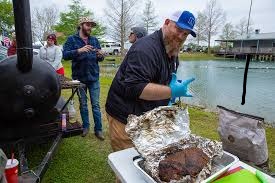
Consistent practice of Your Barbecue Skills

Not only do you have to follow recipes; you also have to practice, patience and experiment to get the right techniques.

Before any contest, you must dedicate enough time on refining your techniques and on such equipment that you should be completely familiar with. During practice sessions,

season your meats with your signature rubs and marinades, cook at various temperatures and time your meats to achieve the right amount of tenderness and one of a kind flavors.

To end up with consistent results you must know your smoker or grill. And long cooks of several hours or overnight can pose problems as far as temperature control.

If you do practice regularly you can predict the way your equipment will handle in varying weather conditions and what various fuels will do for you.

Reliable thermometers and meat probes used to check your internal meat temperatures will keep your entries safe to eat, and cooked to the right temperature.

Repetition not only promotes your technical skills, but also improves confidence. Simulating contest conditions,

like cooking multiple types of meat at the same time or working on presentaion,

are great ways to prepare the mental and physical effects that contest day brings. Practicing also allows you to learn those techniques first hand and try out new flavors – your team will stand out in a field of very skilled competitors.

Putting Together the Right Equipment for competition.

Skill was just as important as the right equipment to have in barbecue contests. Your centerpiece is your smoker or grill,

and it has to be reliable, efficient and suitable for your style of cooking. No matter if you cook your barbecue over offset smokers,

pellet grills, or traditional charcoal pits, keeping steady heat and smoke flow is yet another key to making championship barbecue.

These items are just as necessary as cooking devices, thermometers and meat probes.

The key to the temperature monitoring was that it prevented entry from being made or broken due to overcooking, or undercooking.

For safe, precise meat preparation, knives, cutting boards and gloves are needed.

Hand sanitizers, first aid kit, and cleaning supplies are set up to guarantee high hygiene and safety of everything that happens during the cooking event.

Insofar that many contests run over multiple days being prepared for whatever comes along is the wise thing. Of course,

you’re not required to have uniforms, team banners and tents but these things definitely set

you off as an actual organization and also help you look more professional and build your brand presence. Finally,

these visual elements will also add to the team’s camaraderie, and it will draw the eye from judges and sponsors.

When you enter a barbecue contest, who wins and loses has a much more scientific basis than you may have anticipated.

Barbecue is a highly skilled and precise procedures in judging. The evaluation is carried out by strict professional judges following standardized criteria of every entry fairly and consistently.

For any competitor, who wants to succeed, it’s extremely important to know these judging parameters.

The things that they look for include appearance, tenderness, flavor, and occasionally creativity. Each of these

will give you the best chances of scoring high and standing out among many candidates.

Locating Local or Regional Barbecue Contests.

Firstly

Firstly, when considering various options for joining a competition, it is necessary to conduct research

since there are numerous barbeque events happening all year round across different formats throughout the country.

Such events held at local levels and regions provide favorable grounds for beginners planning on taking part either in teams or an individual level.

These events are usually planned by community groups, food festivals or BBQ leagues where crowds are friendly and supportive.

To get information on these events one can search from reliable websites like Kansas City Barbeque

Society (KCBS) and BBQCompList.com which have the most comprehensive listings of upcoming shows. They give details such as contest size, location, entry requirements and deadlines.

Another good strategy is checking out small town festivals and regional fairs because these contests will often have fewer restrictions and a more laid-back vibe.

This provides an excellent opportunity for beginners to get started without having to worry about the pressure that larger,

more competitive contests can bring. Additionally, many cities and towns hold annual cook-offs tied to cultural celebrations or holiday weekends.

If you keep an eye on local event calendars, social media groups or food blogs you may be surprised at how many hidden gem contests there are near you.

In the end it all comes down to choosing the right competition based on your current skill level, your goals and what kind of environment would suit you best.

Early Registration Is Key

Once you find a barbecue contest that meets your requirements, it is important to register early.

Barbecue competitions are very popular and spaces fill up quickly.

Registering early guarantees your spot and in some cases access to important resources such as pre-event meetings, rulebooks,

vendor discounts etc. When registering, you’ll need to provide information about your team: how many members you have,

what the name of the team is and contact details. Proof of prior experience or membership in barbecue organizations may be required in some contests.

Ensure that you pay the entry fee promptly. These fees go towards prize money, event organization and sometimes charity causes linked with the event itself.

It’s good to keep records of any correspondence with organizers since they usually send contest schedules’ updates,

setup times and specific regulations. In addition, some events may require additional paperwork like health permits or liability waivers;

thus it is prudent to be organized during the registration process.

Official rules – understand them?

Every BBQ contest has official rules set by its organizing body that all competitors have to follow for fairness purposes.

These rules can be very detailed and vary widely depending on the sanctioning body or the contest’s focus.

There are several aspects which are commonly regulated. These include the types of meat allowed, cooking equipment specifications, fuel restrictions,

garnish and sauce usage as well as timing for food turn-in. For instance,

some contests only allow natural hardwood charcoal or wood for smoking while others permit gas grills or electric smokers.

To further ensure that judging is solely focused on the meat, some garnishes might be limited to specific items or banned altogether.

Proper meat handling is a critical component of contest rules with many competitions requiring pre-event meat inspections to confirm quality and safety.

In addition to this, contests usually indicate exact time windows within which competitors must present their entries before judges.

Missing these deadlines can result in disqualification or point penalties. It is crucial that you study the official rulebook long before the contest;

it will allow you to tailor your preparation in order to avoid unintentional violations as well as strategically plan according to judging criteria. Moreover,

familiarity with these rules helps decrease stress during the event thus enabling you to concentrate on cooking rather than get stressed about technicalities instead.

People Choice Events: Miles of Flavor Experience: Getting the Crowd Involved

People Choice events are a bit unique and lively in the BBQ contest world. These competitions are informal in contrast to judge-driven competitions since all the people present are free to make decisions. In tasting, the attendees taste various entries and vote for their favorite therefore this is a democratic and an interactive exercise.

The holiday atmosphere, provided by such a format, gives food enthusiasts an opportunity to enjoy a variety of tastes, as well as communicate with people who grill right behind them.

But this also lacks strict guidelines like the ones in the sanctioned events,

thus, making the People choice events less formal. Newer or less popular teams get the priceless opportunity of exposure through such competitions.

The competitions help the barbeque enthusiasts to try their dishes on a larger population,

get the responses in addition to creating fanships around them.

More often than not though shall find these type of events occurring alongside other major

approved contests thus offering up an ancillary event that in turn highlights the community

interest inherent in a number of various aspects in the celebration of barbecue culture.

BBQ contest events

Although, there are no numerous rules involved in People Choice events as there are in the sanctioned competitions;

they are looser and more laid back enable one to be more creative.

You may use them in the training of the novice members of your team or just to enjoy

a home game when you call some of your friends over to dinner, at the summer period.

Finally it is important not to ignore the fact that the role of sponsors can also achieve a long way in defining the process of such kind of choice during such events.

The theme of this competition unlike competitive contest is easily accessible and enjoyable.

Thus, the show is attended by numerous participants who can be families,

ordinary food enthusiasts, and local enthusiasts. Also, the voting process is done publicly,

which contributes to the creation of a fanatical and loyal base of the barbecue enthusiasts that returns year after year to cheer on their favorite team of pitmasters.

They provide also an excellent opportunity to have some time together as family and friends in a not so serious competitive atmosphere.

And just to add more to it they are cheapier than professional contests with smaller prizes but a lot more fun.

They are always produced in large cities or small towns by local communities, BBQ teams, business chambers or event planners

who are crazy about food and which will be off the hook. 

Entering a Barbecue contest

Barbecue competition is a thrilling chance to investigate a buzzing community of foodies and experienced cooks.

It may look like a frightening process at first; however, it can be simplified provided that you prepare a little bit beforehand.

All the processes of this path are important like the process of searching the appropriate contest and the process of learning to barbecue effectively. Thus,

with a clear way you can go, you will be able to step up your backyard grill to the level of other contenders who are also fans of smoked meat flavors.